

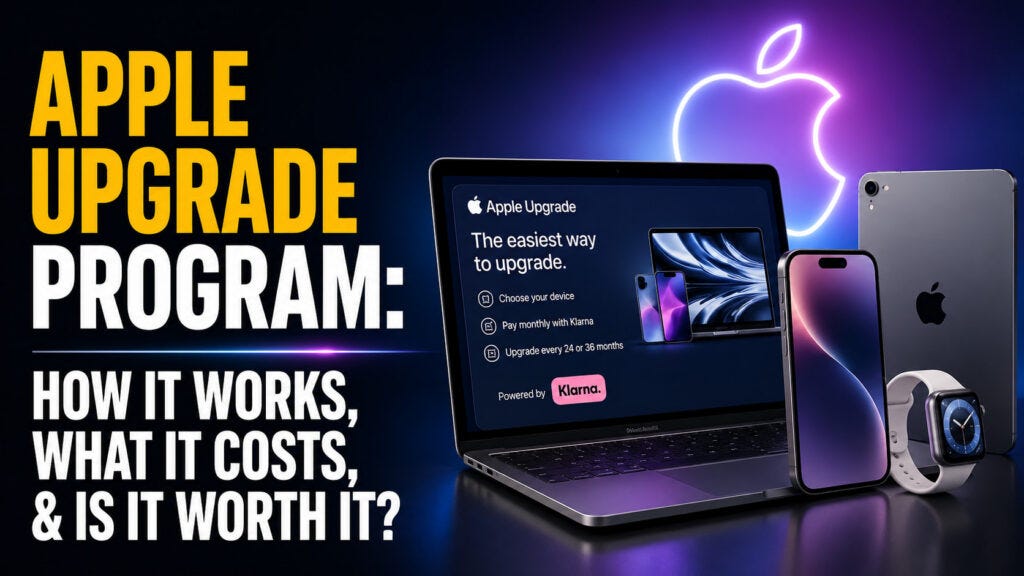
Every time a new pay monthly thing shows up, the collective reaction is basically, Great, another bill. And in a lot of cases, that’s the right instinct. But Apple’s new Apple Upgrade program is one of those rare subscription-adjacent ideas that actually makes sense for the kind of user who already treats iPhones, Macs, iPads, and Apple Watches like consumable products, whether they admit it or not.
Apple Upgrade is a Klarna-backed lease program that lets you get an iPhone, Apple Watch, Mac, or iPad on 12– or 24–month terms for phones and watches, and up to 36 months for Macs and iPads.
The headline pitch is simple. Pay a lower monthly amount than you would on a traditional 0% installment loan, then at the end you decide whether to upgrade to something new, return the device and walk away, or pay a buyout amount and keep what’s in your hand. In other words, it’s lease-to-own, not pure renting—the ownership option is still on the table, it’s just pushed to the end of the line.
For the crowd that refreshes hardware on a regular basis, that structure actually lines up with reality. If you’re already flipping your iPhone every year or two and turning that old device into trade-in credit, you’re effectively behaving like a lessee — you’re just managing the resale and timing yourself.
Apple Upgrade formalizes that pattern allowing predictable payments. What makes the program very intriguing is Apple gives you an off-ramp at the end, and if the device is still your favorite when the term ends, you can pay the difference between what you’ve already shelled out and the list price and keep it.
The psychological win here is that you’re not locking yourself into perpetual renting unless you choose to. If the tech treadmill slows down for you — maybe this year’s iPhone is a snooze, or your MacBook is still humming along — you can just convert that lease to ownership instead of feeling forced into swapping it for something marginally better. You’re essentially buying flexibility: return, upgrade, or keep, all from the same agreement.
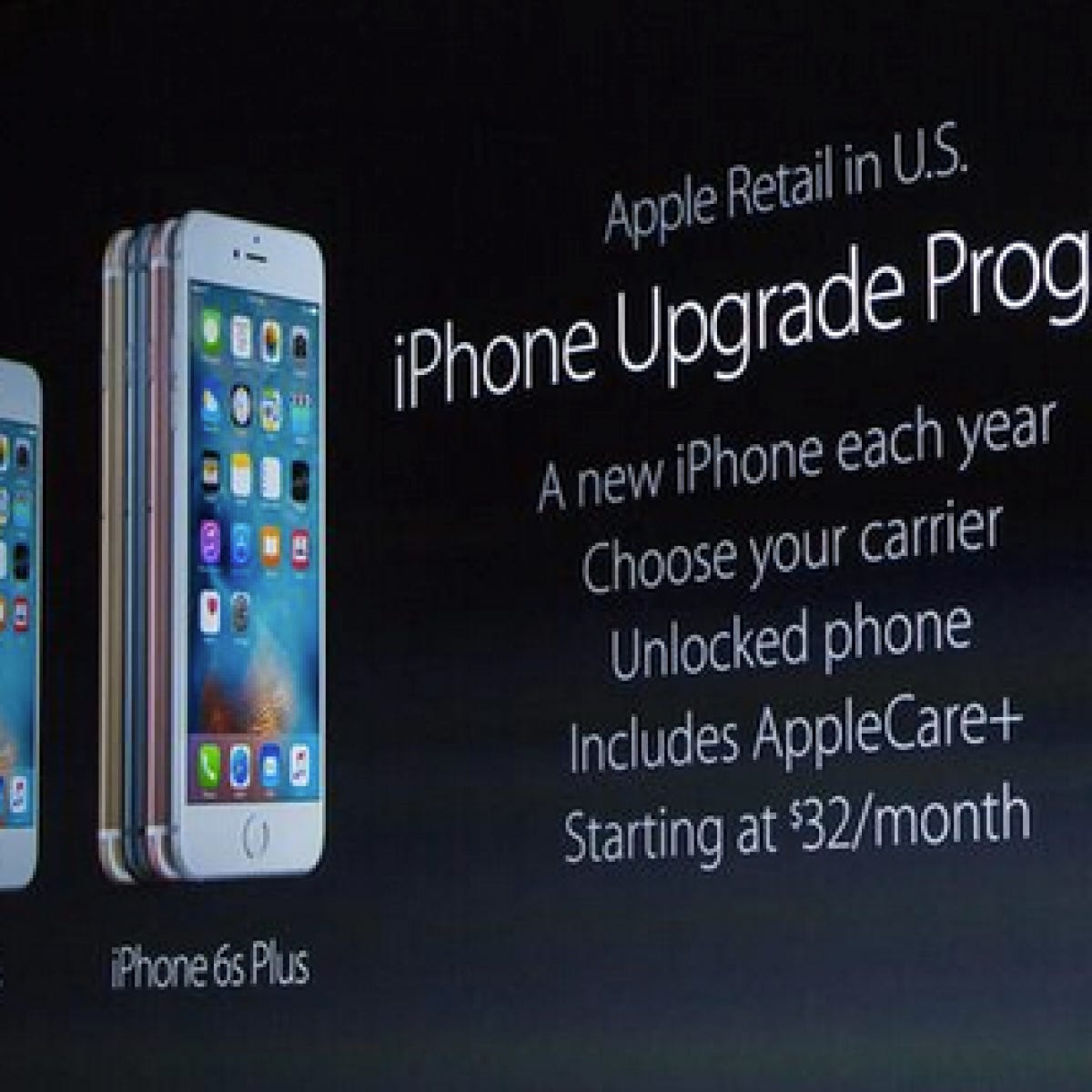
Where this starts to feel less friendly is when you compare it to the outgoing iPhone Upgrade Program. That old setup was a straight 0% installment loan that included AppleCare+ (often with Theft and Loss) baked into the monthly payment. You paid a bit more per month, but you got protection automatically — and you could usually upgrade after 12 of 24 payments, which made annual iPhone swaps pretty painless.
Apple Upgrade flips that script. AppleCare+ is no longer part of the lease price. Instead it’s optional and billed separately if you want it.
You can attach traditional AppleCare+ (or the newer AppleCare One bundle that covers multiple devices), but that’s an extra monthly charge on top of your lease payment, not something quietly bundled into the advertised number. The marketing focuses on that enticing low lease figure — iPhone from $17.99 a month — but the fully protected, realistically how people use their devices cost jumps once you add coverage back in.

And that’s really the main downside of this new program. Protection went from baked-in default to being an upsell. Under the old iPhone Upgrade Program, you didn’t have to think about whether you were covered; AppleCare+ was just part of the deal, and the price reflected that. Under Apple Upgrade, AppleCare+ or AppleCare One becomes yet another subscription choice you have to mentally budget for, even though the risk profile of carrying around a thousand‑dollar glass slab hasn’t changed one bit.
If you skip AppleCare+ to keep your monthly payment low, you’re now returning a leased device at the end of the term with no safety net beyond the standard limited warranty — and any damage can translate into extra fees when you give it back. If you do add coverage, the math often ends up higher than what people were effectively paying under the old all‑inclusive program once you line up equivalent protection. The “cheaper” monthly figure is, in a lot of cases, just Apple unbundling insurance so it shows up as a separate line item instead of quietly hiding inside the loan payment.
So where does that leave the subscription‑skeptical crowd? If you’re someone who buys a device outright and happily runs it into the ground for four, five, six years, Apple Upgrade is probably not for you.
A lease only makes sense if you either want a known exit ramp or you’re already living on a fairly fast upgrade cycle. For those people — the annual iPhone refreshers, the MacBook‑every‑three‑years folks — the program can be a decent fit precisely because it mirrors what you’re already doing, while giving you the option to buy the device at the end if it turns out to be a keeper.
Here’s the thing, folks: You do have to go in eyes open. Apple Upgrade is basically the hardware version of software’s everything has a monthly cost now world, with just enough ownership at the end to make it palatable for people who hate feeling like they’re only renting their stuff.
With that . . . For habitual upgraders, its flexibility and convenience can be a clean way to manage the constant flow of new devices — so long as you remember that the real cost of living in that ecosystem includes AppleCare+, whether Apple chooses to bundle it in or not.
When you need technology every day to make your living you should not mind the monthly fees which are attached to it.
Please visit Binary News where we post regular opinion pieces about including but not limited to business, politics, sports, and technology.