

Note: Before we get into this week’s Friday Folder, I want to acknowledge that last week’s edition was delayed because I’ve been working through some personal things and needed a little extra time to handle them properly.
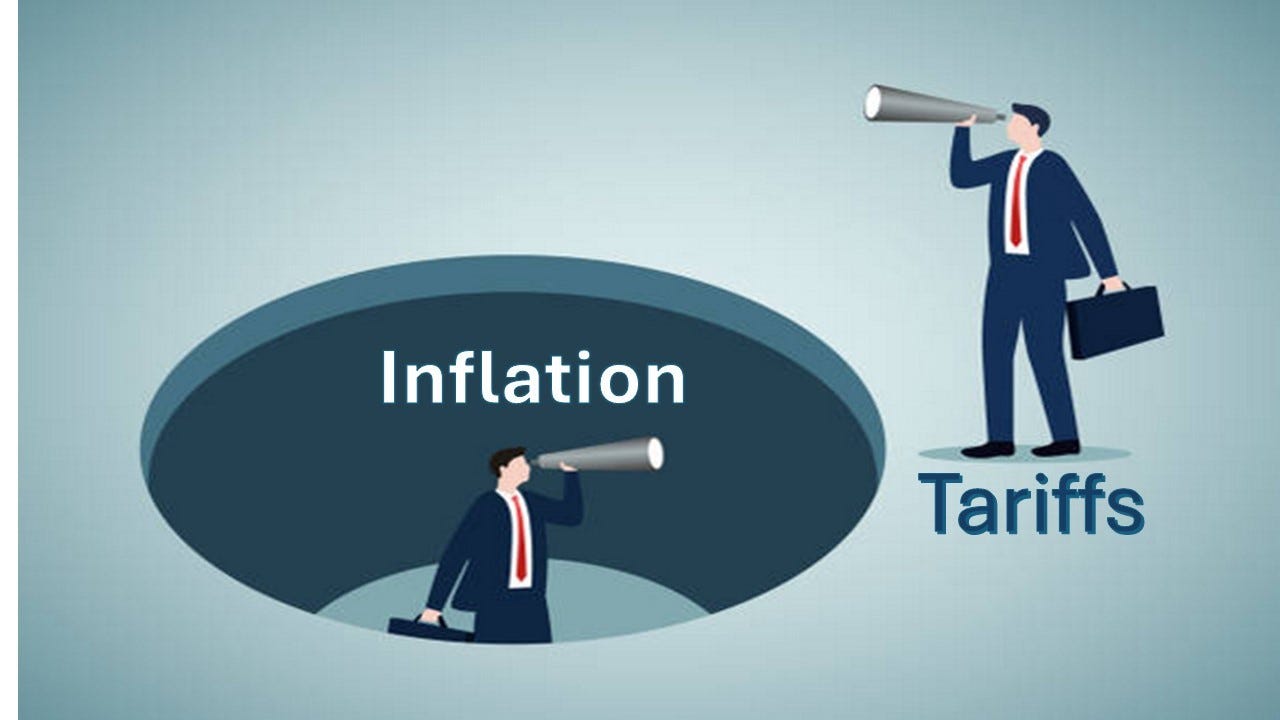
We’re living with a double whammy. The high inflation that built up during Biden’s presidency raised prices of everyday things, and the broad tariffs during in Trump’s second term have layered additional cost increases on top of those already‑higher prices, especially in sectors that rely heavily on global supply chains and imported inputs.
When Biden took office in January 2021, year‑over‑year inflation was about 1.4%, but it climbed quickly as the economy reopened, peaking around 9.1% by June 2022 — the highest in roughly four decades. Over the full Biden term, consumer prices rose roughly 21–22%, meaning the new normal price level for everyday goods and services ended up far higher than it had been in 2020. Economists and official analyses point to a combination of strong post‑pandemic demand, large fiscal support like the American Rescue Plan, and supply constraints in areas such as ports and microchips as key drivers of that inflation surge, rather than any single policy choice alone.
Crucially, wages did not fully keep pace with these price increases during Biden’s term. One analysis of January 2021 through January 2025 found wages up about 19–20% while prices rose over 21%, leaving workers with slightly less purchasing power despite nominal pay raises. In practical terms, by the time Biden left office, we were already paying more for food, housing, energy, and other essentials, and those higher price tags became the starting point for the next administration rather than a temporary spike.
Trump’s second term, beginning in January 2025, has centered trade policy and tariffs as major tools, dramatically increasing the cost of imported goods that flow through U.S. supply chains. Within months of taking office, Trump used emergency and trade authorities to push average effective U.S. tariff rates sharply higher, with measures that at one point lifted the overall average from a few percent to an estimated level in the double digits — historically high by modern standards.
Specific actions have targeted key industrial and consumer categories causing tariffs on metals like steel, aluminum, and copper to be as high as 50%, a 25% tariff on imported vehicles and parts, and broad baseline tariffs of around 10% on many other countries’ products.
Tariffs cause the cost of components and finished goods coming into the country to rise, and those higher costs tend to be passed along to businesses and ultimately to consumers through higher prices. When tariffs hit sectors that were already under strain from earlier supply chain disruptions — such as autos (which rely on global parts), construction materials, electronics, and clean‑energy equipment — the result is that goods that were already more expensive because of past inflation become even costlier.
Supply chain shortages are the bridge that links Biden‑era inflation with Trump‑era tariffs in the prices we see at the store today. During Biden’s term, the official record notes that inflation was driven in part by strong demand colliding with limited capacity in ports, shipping, and critical inputs like semiconductors, which created bottlenecks and shortages. These constraints meant that even without tariffs, many products were hard to source, delivery times stretched out, and firms had to bid up prices for scarce materials, feeding the initial inflation spike.
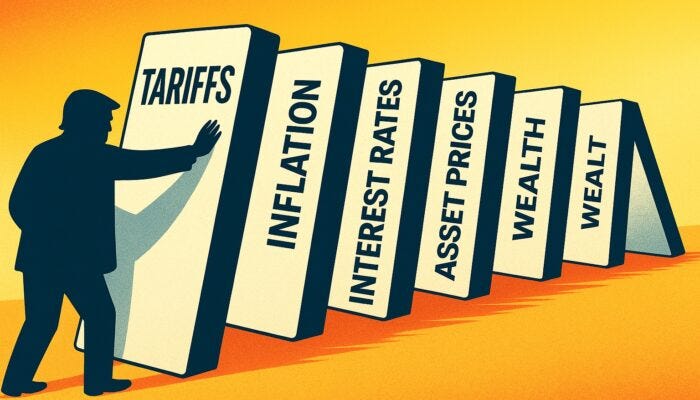
Trump has added tariffs on top of those still‑fragile global supply chains, introducing new frictions. Higher tariff rates can cause foreign suppliers to reduce shipments into the U.S. market, redirect goods elsewhere, or demand higher prices to offset the tariff burden, all of which can worsen scarcity for certain products here.
At the same time, complex and frequently changing tariff schedules — including the brief period of sweeping reciprocal tariffs later struck down by the Supreme Court and replaced with a universal 10% tariff for a limited window — add uncertainty for importers and logistics planners, making it harder to lock in stable supply contracts.
Here’s the thing folks: When we stack all of this together price levels get lifted by several years of above‑normal inflation, combined with ongoing tariffs on a wide range of imported goods and inputs that raise costs further and can constrict supply. Even as inflation rates have come down from their 2022 peak to the low‑single‑digit range, the cumulative increase in the Consumer Price Index under Biden means prices did not reset back to pre‑pandemic levels, and Trump’s tariffs mean many categories, from cars and appliances to metal‑heavy products, face additional upward pressure.
With that . . . The story behind everything feels more expensive is thus twofold and interconnected. Biden‑era inflation pushed the baseline prices of goods and services higher and reflected real strains in global supply chains; Trump’s tariff strategy has then raised the cost of importing many of those same goods, in some cases tightening supply further and reinforcing higher prices rather than relieving them.
Please visit Binary News where we post regular opinion pieces about including but not limited to business, politics, sports, and technology.